Where the water starts decides the bill
Owners in Orange usually call about a chimney leak after the first real storm of the season. The stain is on the ceiling, the wall or the hearth, and the question is the same each time: what will this cost? The answer depends almost entirely on where the water gets in, and a chimney gives it several doors.
This post sorts the usual sources by what they cost to fix, what can wait a season and what cannot, and how our written bid separates them so you are not paying to fix three things when one is at fault.
Four usual entry points
Most chimney leaks trace back to one or more of these:
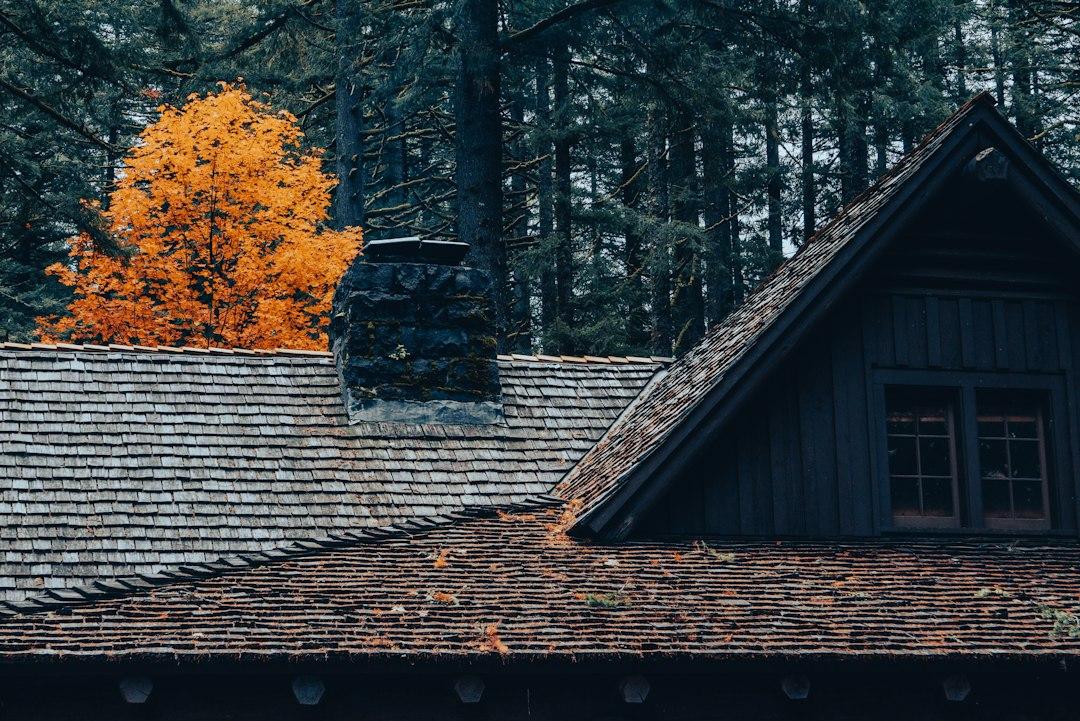
- The top of the stack. On a brick chimney that is the crown, the concrete slab around the flue. On a framed chimney over a metal fireplace it is the chase cover, the sheet metal lid on the box.
- The flue opening. With no cap, rain falls straight in. With a damaged cap, it blows in sideways.
- The roof joint. The metal pieces that seal brick to shingles wear, lift or get covered in tar at a reroof.
- The brick itself. Open joints and porous brick soak up rain on the stormy side of the stack.
A good leak bid names which of these is at fault, and how we know. Guessing leads to fixing the cheap item first and hoping.
How we find the source
On the visit, we start inside: where the stain sits, how big it is, whether it is fresh. Then the roof: the top of the stack, the cap, the flashing and the face brick. For a framed chimney, we look along the seams of the chase cover and around the collar where the pipe passes through. If the source is still unclear, we wet sections of the chimney in turn, starting low and working up, and watch for the moment water appears inside.
That last part is what our published leak price covers. Our range for tracing and repairing a chimney leak is $535 to $3,200. The low end is a single seam or a short run of failed caulk at the roof. The high end is a leak with more than one door, fixed together.
Crown, chase cover or flashing
Each of the top-side sources has its own repair options, and its own line on the bid.
Crown. If the crown is sound with fine cracks, a coat of elastic crown sealer may be enough for several years. If it is broken through, loose, or was never more than a thin layer of mortar, it comes off and a new one is formed with a proper overhang. The sealer option is far cheaper. The recast lasts far longer. Our bid shows both when both are honest options, and the chimney crown repair page covers it in more depth.
Chase cover. Older covers on framed chimneys were often thin galvanized steel, and many have rusted through or sagged so water ponds on them. Replacing one is a modest job. The new cover is bent to the measured size of your chase in stainless steel, with a raised center so water runs off. See chimney chase cover for that work.
Flashing. Where the roof meets the stack, two layers of metal overlap so water cannot get behind them. If those layers are sound but the sealant has aged, resealing is a small job. If they have rusted, been nailed through or tarred over, they come out and new metal goes in. On a wide chimney, a diverter built on the uphill side keeps water from pooling. That diverter runs $430 to $965 on its own, or $645 to $1,600 with all the roof metal replaced at once.
Crowns, chase covers and flashing alone do not have a published figure, since the size and state of each varies too much. They get their own line, priced after the visit. To start that, send the form with the address and where the water shows up inside and we will call back to book the leak visit.
What can wait a season
Not every leak needs the full fix this week, and our bids say so when it is safe to wait:
- A slow stain that only shows after the heaviest storms, on a wall with no sign of soft drywall.
- Fine cracks in a crown that is otherwise solid.
- A cap that is bent but still covering the flue.
In those cases we may suggest a temporary measure now and the full repair before the next rainy season. The bid will show both lines.
What should not wait
Other findings belong at the top of the list:
- Soft or bulging drywall, wet insulation or a damp smell in the attic.
- A rusted chase cover with water pooled on it, where rain is getting into the framing.
- Water in the firebox or on the damper every time it rains.
- Brick faces flaking or popping on the weather side of the stack.
Wood framing next to a chimney stays wet longer than the rest of the roof, so rot can set in faster than owners expect.
Waterproofing comes last
Once the crown, cap, flashing and joints are sound, a breathable masonry repellent can be added to the brick to cut how much rain it absorbs. It is not a fix for a leak on its own, and we do not put it on a chimney with open joints or a broken top. When it fits, it appears as an optional last line on the bid. The chimney waterproofing page has more.
Orange, Santa Ana and the winter storms
Orange County does not see much rain in a typical year, but it tends to arrive in a few heavy bursts, often driven hard by wind. A chimney that stays dry through light showers can leak badly in one of those. Many Orange and Santa Ana houses have had at least one reroof, and the chimney flashing was not always replaced with it. Newer homes in Placentia and nearby often have framed chimneys with original chase covers, now past their useful life.
For the wider picture of how we price and sort repairs, see reading a chimney repair bid and the chimney leak repair page.
When the stain appears
Once you see water near the chimney, the sooner the source is found, the fewer lines end up on the bid. Our contact page is where to start, from Orange or any of the cities around it.
Rather See Your Own Numbers?
Lathrop Chimney Contractors looks at your chimney, then writes every job on its own line with a price, a cheaper route where one is safe, and a mark on what can wait. From Orange to Santa Ana, Placentia, Cerritos and beyond.