
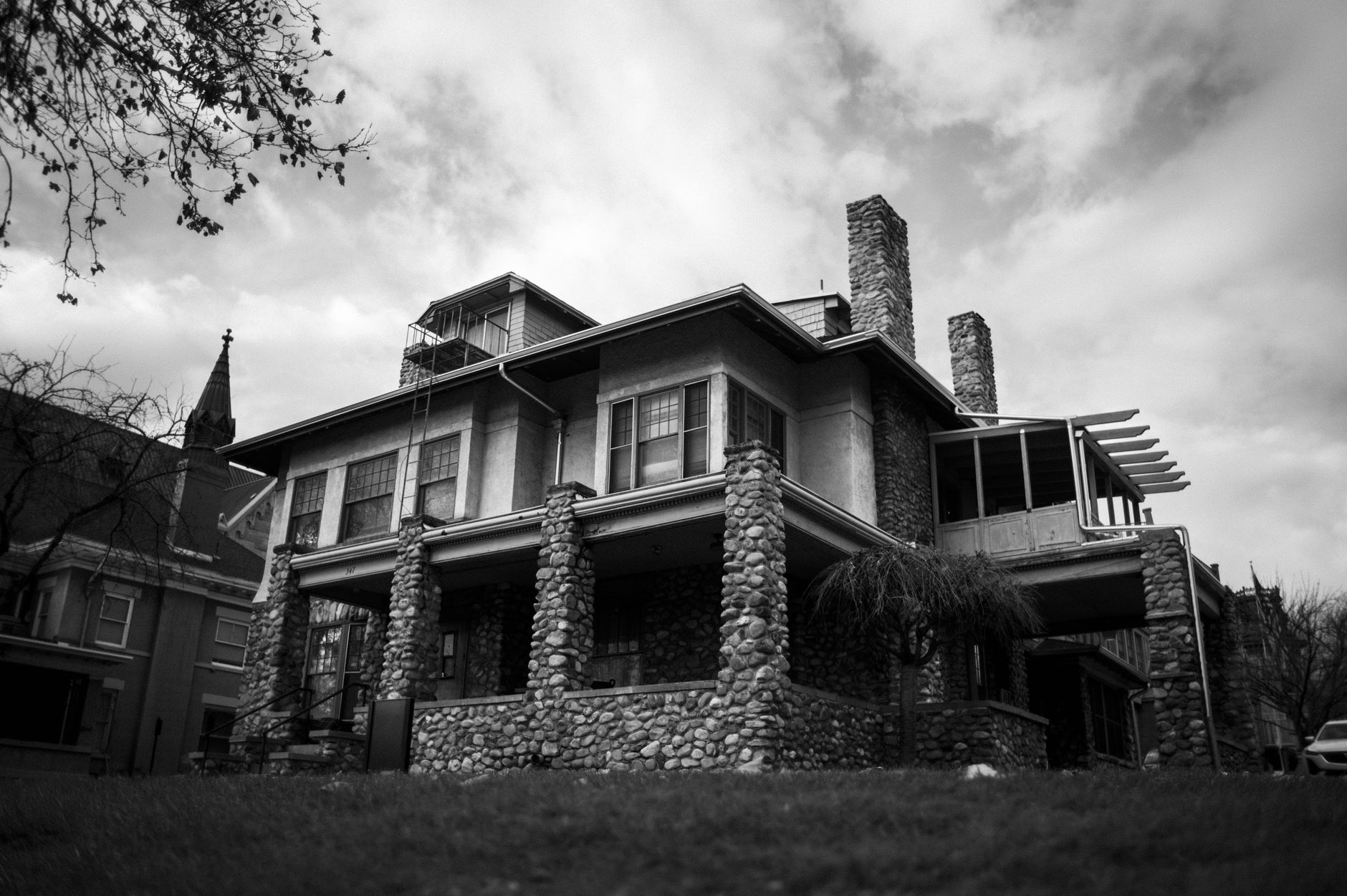
Old tile, old iron, old mortar: the chimney in a pre-1980 sale
Book the pre-sale camera inspection
Give us the address, the rough age of the house and whether you are the buyer or the seller. We call back to arrange access.
The parts of an older chimney, from the hearth up
A chimney on a house built before 1980 is usually a stack of materials from another era. At the bottom sits a firebox of yellow firebrick set in fireclay. Above it, a cast iron throat damper on a pivot rod. Then a brick smoke chamber that narrows into a flue lined with square or round clay tiles, stacked one on another with mortar between. Outside, the brick was often laid in lime mortar, and the top was finished with a thin mortar wash instead of a formed crown.
Each of those parts ages in its own way. Fireclay joints open, iron dampers rust and seize, tile joints crack from heat or from shaking, lime mortar washes out, and thin crowns split. None of this is unusual for the age of the house. What matters for a sale is which parts have reached the point where they affect safety or will soon let water in, and what each would cost to put right.
What the Level 2 checks on each part
The camera goes up the flue from the firebox and records every tile joint to the top. On an older chimney that footage is the core of the report, since it shows offset tiles, missing mortar, cracks and old patch work that a flashlight never reaches. We also open and close the damper, look at the firebox and smoke chamber, check the brick and top from the roof, and follow the stack through the attic where it can be reached.
The report sets each part next to its finding in plain terms. A cracked tile is named by its height in the flue. A rusted damper is described by what still works. A soft mortar joint is noted by its face and its course. Buyer, seller and the two agents then work from one shared record of what turned up.
- Firebox walls, floor and joints
- Damper plate, rod and seat
- Smoke chamber surface and shape
- Every flue tile joint on camera
- Brick, mortar, top and cap from the roof
- Where the stack meets the attic framing
From finding to figure
Our written bid follows the report line by line. Roof leak work carries a published range. Caps are quoted after we measure. Liners, crowns, dampers and masonry carry a price written for that chimney after the inspection, with a cheaper option beside the full fix where one exists. The bid also marks which items can safely wait for the next owner and which should be dealt with before anyone lights a fire.
Sellers use that to decide whether to fix a finding, price it into the asking figure or disclose it as it stands. Buyers use it to judge what a request should look like. Either way, the number on the table comes from someone who has seen the chimney, not from a guess made in the last week of escrow.
Inspection figures for a sale
Older houses on the market usually warrant the Level 2 with its flue footage. Level 1 is there if you only want an early read.
- Camera inspection, full flue, written report
- $375
- Visual check only, no camera
- $160
Repairs found on the camera footage are written into a separate bid, one line per item.
Older house sale questions
Why does the age of the house matter so much?
Chimneys built before about 1980 tend to have clay tile flues, iron throat dampers and lime mortar. Each of those parts wears in a predictable way, and the camera is the only means of seeing the tile joints. A newer factory built fireplace raises different questions.
Our house in Old Towne Orange has never had a chimney report. Is that a problem?
Not by itself. Plenty of older houses change hands with no chimney record at all. The inspection becomes the first record, and the buyer and seller both work from it.
The fireplace is only decorative. Do we still need the camera?
If nobody will light a fire, the flue matters less, but the top of the chimney and the roof joint still keep water out of the house. Say so when you book and we will tell you whether a visual check covers what the sale needs.
Who sees the report?
Whoever ordered it decides. Buyers usually share it with their agent and the seller's side. Sellers often hold it until they have settled on which items to fix, then attach it to the disclosures.
Can the repairs wait until after closing?
Some can. The bid marks items that can wait, such as worn joints below the roofline or a stiff damper, and items that should not, such as open tile joints in a flue that will be used or water reaching the framing.
Selling or buying an older house in Orange?
Reach us through the contact page with the address and your role in the sale. The camera footage, the report and a priced list of fixes follow the visit.
Call (657) 233-4756